String Floss or Water Flosser: What’s More Effective for Gum Health?
When it comes to oral hygiene, brushing often gets all the attention. But if you are skipping flossing, you are leaving nearly 40 percent of your tooth surfaces untouched. The real question most patients ask today is not whether to floss, but how. Should you stick to traditional string floss, or switch to a water flosser?
Let us break this down in a way that actually helps you choose what works best for your gums.
What exactly are we comparing?
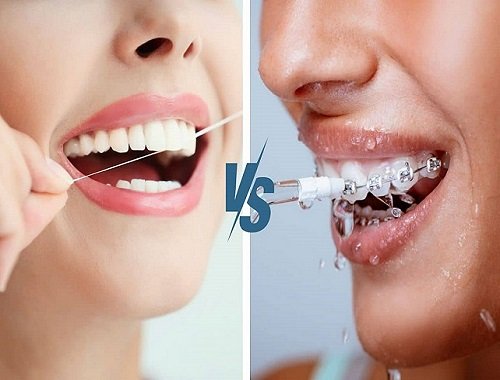
String floss is the conventional thread used to physically scrape plaque and food debris from between teeth and under the gumline. A specialised, flat, waxed nylon thread is designed that effectively slides between two teeth and cleans just under the gumline.
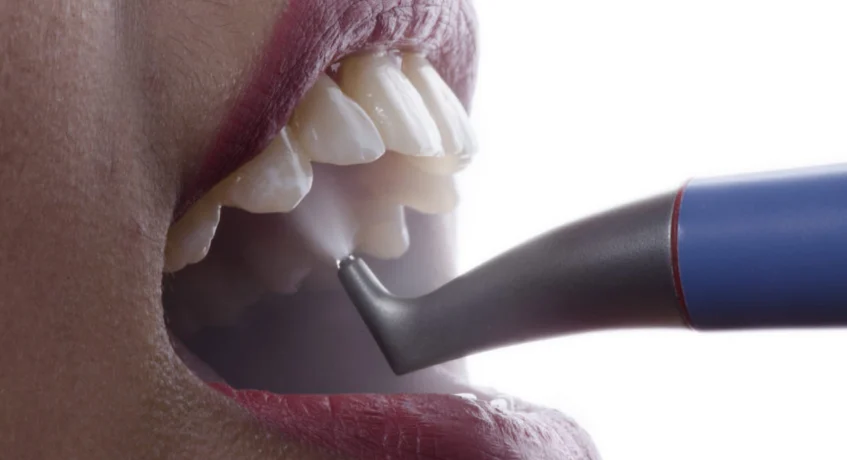
Water flossers, also called oral irrigators, use a pressurized stream of water to flush out debris and disrupt plaque. This is useful for those who do not have the manual dextrality of using a string floss as well as for implant maintenance.
At first glance, both aim to clean the same areas. But the way they do it is very different.
Mechanism Matters More Than You Think
String floss works through direct mechanical action. When used correctly, it hugs the tooth surface and scrapes off plaque biofilm. This is especially important because plaque is sticky and adheres firmly to enamel and root surfaces.
Water flossers, on the other hand, rely on hydrodynamic force. The pulsating water stream penetrates below the gumline and disrupts bacteria. It is particularly effective in areas that are difficult to access, like deep pockets or around dental work.
So, in simple terms:
- String floss = scraping and removal
- Water flosser = flushing and disruption
Both sound useful, and they are. But effectiveness depends on what your gums actually need.
Which One Is More Effective for Gum Health?
Here is where things get interesting.
Research and clinical experience suggest that string floss is slightly better at removing plaque between tight contacts, especially in patients with healthy gums and no complex dental work.
However, water flossers often perform better in reducing gum inflammation and bleeding, particularly in patients with:
- Gingivitis or early periodontitis
- Braces, implants, or bridges
- Limited dexterity
This is because water flossers can reach deeper into periodontal pockets and are easier to use consistently.
So if your focus is:
- Plaque removal in tight spaces → string floss wins
- Reducing gum inflammation and improving compliance → water flosser often wins
Technique vs Consistency: The Real Game Changer
One thing patients rarely realize is this: perfect technique is rare.
String floss requires:
- Proper angulation
- A “C-shape” adaptation to the tooth
- Gentle movement under the gumline
Without this, flossing can become ineffective or even traumatic.
Water flossers are far more user-friendly. Even with minimal training, most people can use them effectively. This often leads to better long-term consistency, which is critical for gum health.
And in dentistry, consistency almost always beats perfection.
Special Situations Where One Clearly Wins
Choose string floss if you:
- Have tight contacts with no restorations
- Are highly disciplined with technique
- Want precise plaque removal
Choose a water flosser if you:
- Have braces, implants, crowns, or bridges
- Experience bleeding gums
- Struggle with manual flossing
- Want a more comfortable experience
Can You Use Both?
Absolutely, and in many cases, that is the ideal approach.
Using string floss once a day for mechanical plaque removal and a water flosser to enhance gum health can provide a more comprehensive clean. Think of it as combining precision with reach.
So, What Should You Actually Do?
If you are someone who already flosses correctly and consistently, stick with string floss. You are doing well.
If flossing feels like a chore you avoid, a water flosser might be the upgrade that finally makes interdental cleaning a habit. Because at the end of the day, the “best” method is not the one backed by studies alone. It is the one you will actually use every single day.